Peptide COA watchdog
Fake COAs don’t get a free pass.
The COA Catcher follows the paper trail behind peptide Certificates of Analysis—checking report IDs, batch details, laboratory attribution and source evidence before a case ever reaches the board.
Evidence has a trail. We follow it.
Source correction: the A Plus screenshot is an unverified lead because its identifying fields were redacted by the source. It is not a confirmed fake finding.
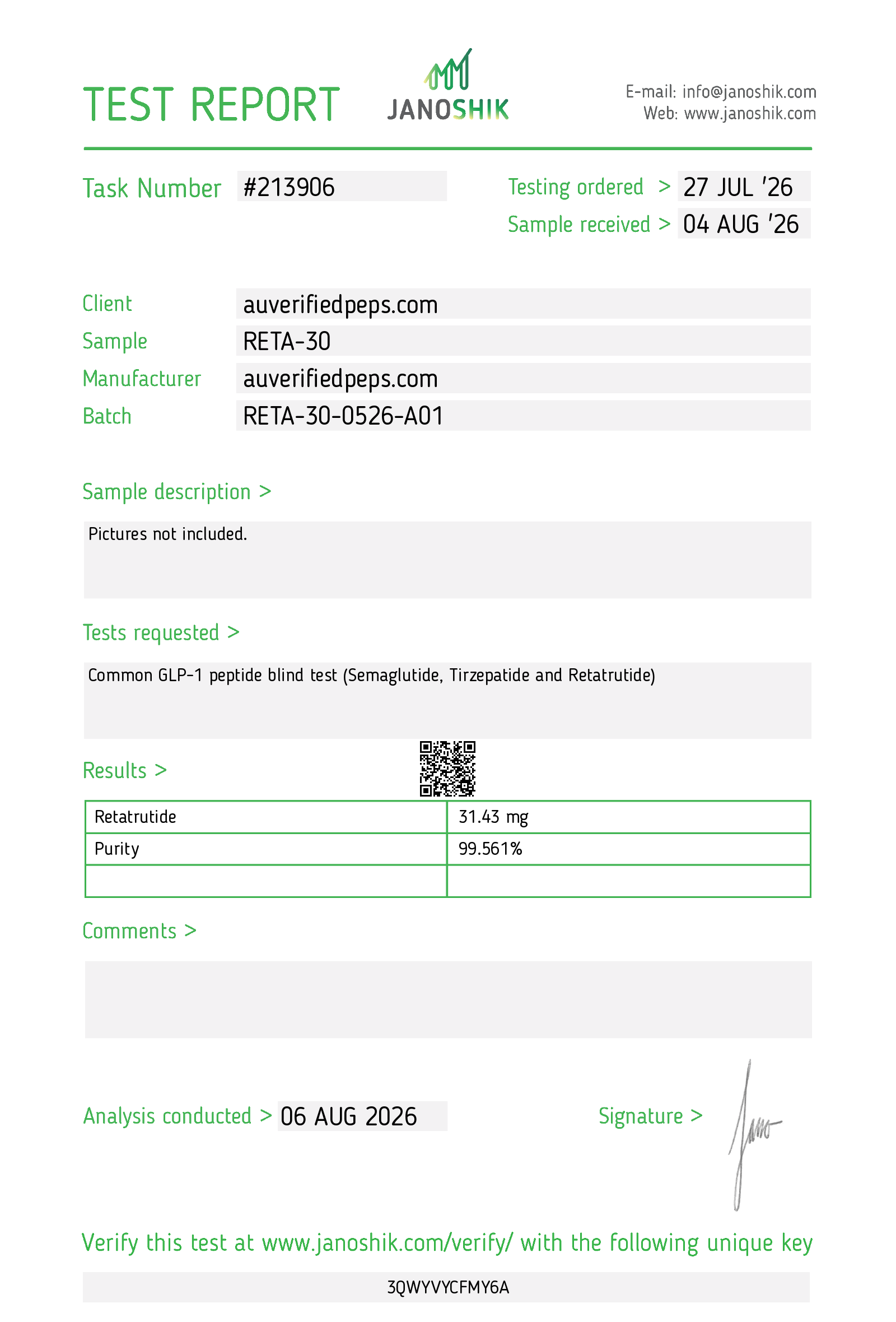 auverifiedpeps.com
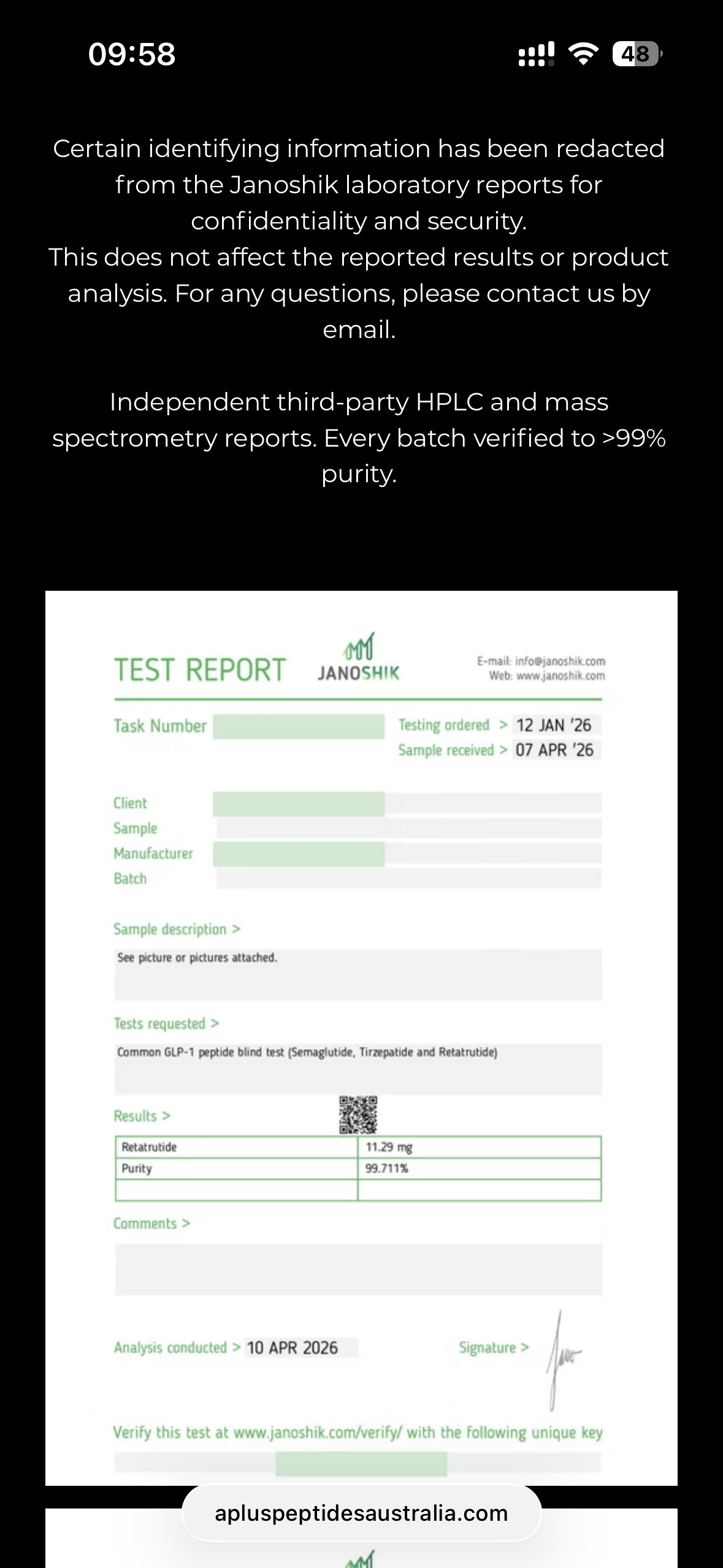 apluspeptidesaustralia.com
SOURCE REDACTION — NAME NOT RECOVERABLE
Client: redacted · Manufacturer: redacted · Task number: redacted · Unique key: redacted. Janoshik’s public-results search returned no match for the visible 11.29 mg result, 99.711% purity or the vendor name on 31 August 2026.
A flagged inconsistency is a reason to verify—not a verdict. A listing does not, by itself, establish fraud, illegality, intent or liability. Every case must be read at its stated product, batch, transaction and source scope, together with its limitations, date, review status and any vendor or laboratory response. Absence from the registry is not an endorsement or proof of safety, authenticity or compliance.
Our verification trail
Receipts over rumours.
A polished PDF is not proof on its own. We examine whether a Certificate of Analysis can be traced, whether its details line up and whether the available evidence supports a narrow public finding.
Suspicion starts a review. It never settles one.
01
Capture the evidence
Preserve the original report, its source, relevant dates and the product, order or batch context.
02
Follow the trail
Check report identifiers, lab attribution, methods, timestamps, verification links and document consistency.
03
Ask for answers
Where appropriate, vendors and laboratories are invited to clarify the record or provide supporting material.
04
Publish the file
A finding goes live only after review. Responses, material updates and corrections remain part of the file.
Certificate cross-check
What raises our eyebrow
These clues can make a peptide COA worth a closer look. None is proof of a fake certificate on its own.
ID // TRACE
Report identity
Report numbers, verification links or QR destinations that do not resolve—or point somewhere unexpected.
LAB // SOURCE
Laboratory attribution
Lab names, contact details, report formats or claims that conflict with an official laboratory source.
BATCH // MATCH
Document consistency
Certificates reused across products or batches, mismatched dates and methods, missing pages or visible edits.
The case board
Cases are now on the board.
Public case files are now available. Each records the evidence reviewed, its stated scope and review status, any vendor or laboratory position supplied, and the open questions that remain.
-
Defcon Peptides
Six public “View Full COA” entries opened seller-created summaries without original Janoshik task numbers, unique keys or direct verification links. Two displayed KVR report identifiers matched Kovera Labs…
-
Platinum Peptides — Eight Reports, Eight Dead Ends
EIGHT REPORTS. EIGHT CODES. EIGHT DEAD ENDS. Platinum Peptides tells readers that its published Janoshik reports can be independently confirmed. We tested that claim using the exact details…
-
Peptide Connect AUS — Same Report, Different Name
SAME REPORT. THE NAME DISAPPEARS. Peptide Connect AUS displays a Janoshik report for GHK-Cu 50mg. Task #99263 is visible. So are batch HK50-0107, the 60.14 mg result, 99.693%…
-
Aussie Peptides — One Task Number Exposed the Black Bars
ONE TASK NUMBER BLEW OPEN THE BLACK BARS. The Aussie Peptides copy shows a convincing set of numbers: task #105627, batch JP20260007, 11.72 mg of BPC-157 and 99.765%…
-
Lazarus Labs — Two Batch Codes, No Visible Link
TWO BATCH CODES. THEN THE IDENTIFIERS DISAPPEAR. At first glance, the page looks reassuring: a Janoshik certificate displayed beside the Lazarus vial batch. Look closer and the numbers…
For evidence holders
Got a COA that doesn’t add up?
Keep the original file, the page it came from, vendor, product and batch details, and a note explaining what caught your attention. Anonymous tips may start a review, but they are never published as fact without corroboration.
Private evidence intake is open. Submit material through the Private Evidence Drop for review. No submission is published automatically.
For vendors and laboratories
On the other side of the file?
Provide context, supporting documents or a correction. Material responses are assessed fairly, date-stamped and reflected clearly in the public record.
Right of reply is open for every published case. Vendors and laboratories may use the Private Evidence Drop to submit corrections, context or supporting evidence for review.
The standard applies to us, too
Transparency belongs in the case file.
Cases are assessed from the evidence available at the time and may be updated when new material is received. Readers should review each record at its stated scope and consult the cited primary sources.
The COA Catcher is an educational evidence directory—not a store, testing laboratory, regulator, medical service or substitute for professional advice.